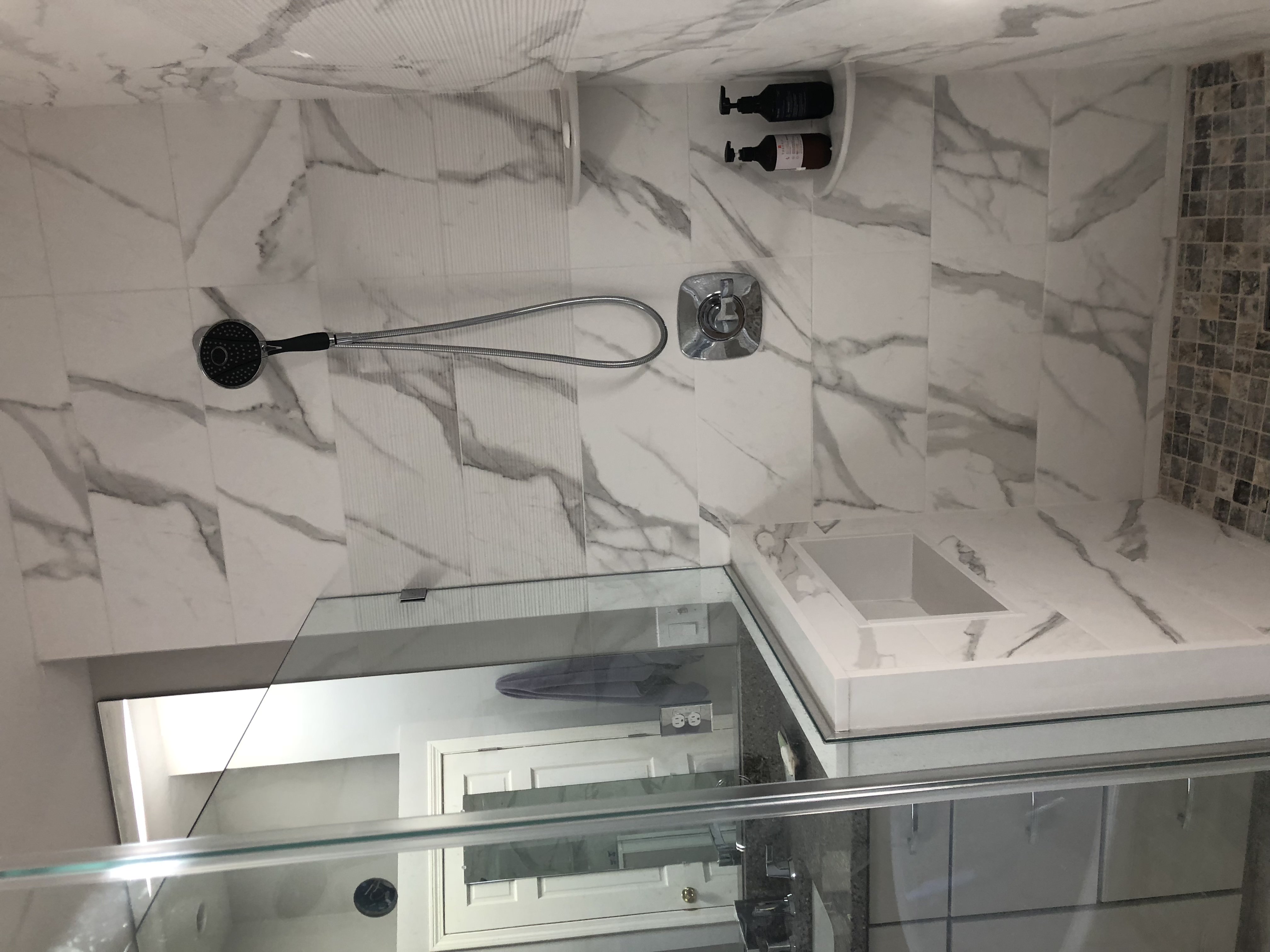
Tub to Shower Conversion Cost: What It Takes and What Has to Move
How much does a tub to shower conversion cost?
A basic conversion with a prefab acrylic surround runs about $1,500 to $3,500. A custom tiled walk-in shower runs $5,000 to $18,000 depending on size, materials, and glass. Permits add $100 to $500. The drain almost always has to move, which means opening the floor, and that is the difference between a real conversion and a liner installed over your existing tub.
Why Homeowners Convert a Tub to a Walk-In Shower
It is the most requested bathroom change we see, and for good reason. A walk-in shower is easier to get into, safer, simpler to clean, and it makes a small bathroom feel considerably larger than the same room with a tub taking up an entire wall.
In a primary bathroom, especially for anyone planning to stay in the house long term, it is one of the better dollars you can spend.
Why the Drain Has to Move
Here is the part nobody mentions in the television ads.
A bathtub drain sits at one end of the tub. A shower drain needs to be centered, or at least positioned for proper flow across a sloped pan. Those are not the same location, which means the floor has to come open and the drain line has to be rerouted and re-pitched.
If the drain can stay close to its current position, that is usually a $500 to $800 item. Moving it across the room, or through a slab, runs $1,500 to $2,000 or more.
This is why a properly done conversion costs what it costs, and it is the difference between this work and a one-day bath company installing an acrylic liner over the tub you already have. Those products have their place. They are not the same thing, and the price difference is not markup.
What Is Included in a Tub to Shower Conversion
Demolition and disposal. Cast iron tubs are heavy and sometimes have to be broken up in place to get them out of an older bathroom.
Framing. Expanding from a standard 60-inch alcove to a larger footprint means moving a wall, which means framing and often relocating an outlet or a vent.
Waterproofing. The part that determines whether the shower lasts. Tile and grout are not waterproof. A membrane and a properly sloped, water-tested pan are what keep water out of your framing and the ceiling below. Every shower we build gets a water test before any tile is set.
Tile and glass. Materials span a wide range. Ceramic is the value option, porcelain is the durability pick, natural stone runs highest. Frameless glass costs more than a framed door or a curtain, and it is where a lot of budget quietly goes.
Accessibility features, if you want them. A grab bar and a built-in seat add roughly $800 to $1,200. Which brings up the thing worth deciding now.
Add the Grab Bar Blocking While the Walls Are Open
If there is one piece of advice on this page worth acting on, it is this.
While the walls are open, have solid blocking installed behind the drywall wherever a grab bar might ever go. It costs almost nothing during a remodel. Adding grab bars later to a finished, tiled wall with no backing means opening the wall and retiling it.
Same principle for a curbless shower. The floor has to be recessed to make the drain work, and that has to happen during framing. It cannot be added afterward.
If you are remodeling a bathroom in a house you plan to be in for twenty years, these are the decisions to get right on the front end. There is more under aging in place on our bathroom remodeling page.
Should You Remove the Only Tub in the House?
Think it through.
A share of buyers with young children will keep looking if there is no bathtub anywhere in the home. If you have a second full bathroom with a tub, convert away and do not think about it again. If you do not, weigh how long you plan to stay against what the resale market in your town looks like.
We will give you our honest read during the estimate, including when the answer is that you should keep the tub.
Permits and Timeline
Most conversions require a permit, because moving a plumbing fixture does. Massachusetts requires licensed plumbers for the plumbing work, and inspections come with the permit. We pull the permits and coordinate inspections as part of the project.
Plan on one to three weeks depending on scope and whether the footprint changes. Tile cure time drives the back half of the schedule.
Pricing reviewed September 2026.
FAQ
How much does a tub to shower conversion cost?
A basic conversion with a prefab acrylic surround runs about $1,500 to $3,500. A custom tiled walk-in shower runs $5,000 to $18,000 depending on size, materials, and glass. Permits typically add $100 to $500. The wide range comes down to the shower type, whether the footprint changes, and how far the drain has to move.
Does the drain have to move for a tub to shower conversion?
Almost always. A bathtub drain sits at one end of the tub, while a shower drain needs to be centered or positioned for proper flow across a sloped pan. Those are not the same location, so the floor has to come open and the drain line has to be rerouted and re-pitched. If the drain can stay close to its current position, expect $500 to $800. Moving it across the room or through a slab runs $1,500 to $2,000 or more.
How long does a tub to shower conversion take?
One to three weeks depending on scope and whether the footprint changes. A prefab surround in the existing alcove is at the fast end. A custom tiled shower with a new pan takes longer because tile cure time drives the back half of the schedule, and rushing that is how showers fail. Expanding beyond the original alcove adds framing and usually electrical work.
Is it a bad idea to remove the only bathtub in the house?
It is worth thinking through. A share of buyers with young children will keep looking if there is no bathtub anywhere in the home. If you have a second full bathroom with a tub, convert without a second thought. If it is the only tub, weigh how long you plan to stay against the resale market in your town. We will give you an honest read during the estimate, including when the answer is to keep the tub.
What is the difference between a real conversion and a one-day bath system?
One-day systems install an acrylic liner over the existing tub or surround without moving the drain or opening the floor. That is why they take a day. A real conversion removes the tub, reroutes and re-pitches the drain, builds a properly sloped and water-tested pan, and waterproofs the assembly behind the tile. Those products have their place, but they are a different thing, and the price difference is not markup.
We do tub to shower conversions throughout Worcester County. Free on-site consultation and a written estimate with no obligation. Call (774) 249-0221.