WORCESTER | HOLDEN | PRINCETON | SHREWSBURY

ADU and In-Law Suite Builder in Worcester County, MA

Massachusetts law changed. One accessory dwelling unit is now allowed by right on most single-family lots, with no special permit and no zoning hearing. ARM Construction designs, permits, and builds them across Worcester County, foundation to finish.

Massachusetts Opened the Door on ADUs. Here Is What Changed.

For decades, building a separate living space on your own property in Massachusetts meant a special permit, a public hearing, and a town board that could say no for almost any reason. Plenty of towns simply banned the idea outright. That is over. Under the Affordable Homes Act, which took effect on February 2, 2025, every city and town in the state has to allow at least one accessory dwelling unit by right on lots in single-family zoning districts. The law covers 350 of the 351 municipalities in Massachusetts. Boston runs its own separate program.

By right means what it sounds like. No special permit for the use or the rental, no zoning board of appeals, no discretionary approval that a neighbor can derail. Your town can still enforce building code, setbacks, height limits, and in many cases site plan review, but it applies the same standards it would apply to a single-family home. It cannot require that you or a relative live in either unit, and it cannot require a family relationship between the people who do. For homeowners across Worcester County who have wanted a place for a parent, an adult child, or a rental that pays down the mortgage, the obstacle that stopped them is gone.

What Kinds of ADUs Can You Build?

An ADU is a self-contained living space with its own entrance, kitchen, and bathroom. Beyond that, the form is up to you and your property. Attached ADUs are built as an addition off the side or rear of the existing house, sharing a wall but with separate access. Detached ADUs are standalone cottages, sometimes called backyard cottages, built as their own small structure on the lot. Garage conversions turn an existing attached or detached garage into living space, often the fastest route because the shell and the foundation already exist. Basement conversions finish and legalize below-grade space with proper egress. Attic conversions do the same above.

In-law suites are the same thing under a different name, and for most families in Worcester County that is the actual motivation. A parent who should not be living alone but does not want assisted living. An adult child saving for a house. A caregiver who needs to be on site. The state law removed the owner-occupancy and family-relationship requirements, which means you can build for a parent now and rent it later without going back to the town for permission. That flexibility is worth thinking about before you settle on a layout, because a unit designed only for a relative and a unit designed to also work as a rental are not always the same building.

What Actually Determines Whether Your ADU Works

The law made ADUs legal. Your property decides what is buildable, and in the towns we serve the deciding factor is usually septic. Massachusetts sizes septic systems by bedroom count under Title 5, so an ADU that adds bedrooms can push your system past its rated capacity. If it does, the project turns into a septic upgrade plus an ADU, which is a different budget entirely. In Princeton, Sterling, Holden, Boylston, and the surrounding rural towns, where most properties are on septic rather than town sewer, this is the first thing we check. Well capacity matters for the same reason.

The other constraints are more predictable but still worth knowing before you get attached to a plan. Setbacks and height limits still apply, and on a tight lot a detached cottage may not fit where you pictured it. Parking is capped in your favor: your town can require no more than one additional space, and none at all if your property is within a half mile of a commuter rail station, subway station, ferry terminal, or bus station. Short-term rentals under 31 days are not permitted for a protected-use ADU, so if the plan was an Airbnb, it is not. Historic districts can apply stricter design review. We walk all of this on the first visit, because finding a constraint early changes the design, and finding it late changes the price.

What Does an ADU Cost in Massachusetts?

The type of ADU drives the budget more than the square footage does. A basement or interior conversion generally runs $95,000 to $180,000 when ceiling height and egress requirements can be met. A garage conversion runs $95,000 to $175,000. An attached ADU built as an addition runs $150,000 to $280,000. A detached ADU, which is effectively a small house, runs $200,000 to $380,000. In Massachusetts, detached new construction generally prices between $275 and $450 per square foot.

Conversions cost less because the foundation, walls, and roof already exist, but they are not as cheap as people expect. Most garage slabs in this area were poured four inches thick with no frost footings and no insulation, and living space in Massachusetts needs an insulated, properly drained foundation, so underpinning or a new perimeter footing can add $15,000 to $40,000 on its own. Running water and sewer out to a detached structure adds $10,000 to $25,000 depending on distance, and total utility connections on a detached unit can run $10,000 to $40,000. The largest variable in the rural towns we serve is septic capacity under Title 5, which is why we check it before anything else.

* Pricing estimates as of August 2026
Why Build Your ADU With ARM Construction?

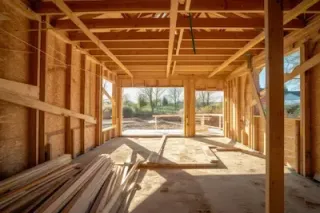
A detached ADU is a small house. It needs a foundation set below frost depth, framing, a roof, insulation and air sealing to current Massachusetts energy code, a full electrical service, plumbing, heat, and finish work. An attached ADU adds the problem of tying all of that into a house that is already standing and already occupied. This is general contracting, not remodeling, and it is why a lot of companies that will happily quote your kitchen will pass on this.

ARM Construction is run by Andrew Mercurio, a fourth-generation builder who started in masonry and grew the company into full general contracting. We self-perform the foundation and stonework rather than subbing it out, which matters most on the part of the job that everything else sits on. We handle the design, the permitting with your town, the build, and the inspections. One company, one point of contact, from the first site walk to the certificate of occupancy.

Andrew has held Massachusetts Construction Supervisor License #CS-093044 since 2011, and ARM Construction & Management Inc is a registered Massachusetts Home Improvement Contractor, registration #153199. Both are active and you can verify either one yourself through the Commonwealth's public license lookup. The Construction Supervisor License is the credential that legally covers structural work, which is exactly what a detached ADU is.

Building ADUs Across Worcester County

We build accessory dwelling units and in-law suites in Worcester, Holden, Princeton, Shrewsbury, Sterling, West Boylston, and Boylston, along with Leominster, Westborough, Northborough, Southborough, and Grafton.

The right ADU looks different depending on where you are. In Worcester, where lots are tighter and the housing stock is denser, garage and basement conversions often make more sense than a detached cottage, and more properties fall inside the half-mile transit radius that eliminates the parking requirement entirely. In Princeton, Sterling, and Holden, lots are large enough for a detached cottage but almost everything is on septic, so Title 5 capacity drives the design. In Shrewsbury and the eastern towns, higher property values make the rental math work faster. We know these towns and we know their building departments, which is the difference between a permit that moves and one that sits.

For a complete overview of Additions and ADUs in Massachusetts, visit our Massachusetts Home Addition Guide.

What Our Customers Say

Rated 5.0 by Worcester County Homeowners

5.0 ★★★★★ Based on 15 Google reviews

I can't say enough good things! I needed a small finish job done at the last minute, and Andrew made it happen quickly and without any stress. The craftsmanship was perfect and everything looks amazing. I'm extremely happy and would recommend him to anyone!

Shauna Gisone Google Review

Andrew and his team are detail-oriented. They are skilled and helped me understand the process of renovating my kitchen. Fantastic communication & high quality service! I am so lucky to have them and recommend them to anyone! When they built my deck, it was so fast & efficient! Call Andrew, you won't regret it

Kelly Cox Google Review

Andrew replaced a garden window in my kitchen, and a sliding door. He did a meticulous job, and went above and beyond to accommodate some special requests that I had. His attention to detail and willingness to do whatever it took to make me happy didn't go unnoticed. Will definitely use him each and every time!

Jessica St. George Google Review

Frequently Asked Questions About ADUs in Massachusetts

The ADU law is new and most homeowners have not caught up with it yet. Here are the questions we get most. If yours is not here, call us at (774) 249-0221.

How big can an ADU be in Massachusetts?

An ADU can be up to 900 square feet or half the gross floor area of your main house, whichever is smaller. On a 1,600 square foot home the cap is 800 square feet. On a 2,400 square foot home you get the full 900. The unit has to be self-contained with its own entrance, kitchen, and bathroom, and it must meet the Massachusetts building code and sanitary code. Your town can still apply setback and height rules, but only the same ones it applies to a single-family home.

Do I need a special permit to build an ADU in Massachusetts?

No. Since February 2, 2025, one ADU is allowed by right on any lot in a single-family zoning district, which means no special permit, no zoning board hearing, and no discretionary approval for the use or the rental. You still need a building permit and the associated electrical, plumbing, and mechanical permits, and your town may require site plan review. What your town cannot do is require owner occupancy, demand a family relationship between the occupants, or ban ADUs outright. The law applies to 350 of the 351 cities and towns in the state. Boston runs its own separate program.

Will my septic system support an ADU?

This is the question that decides most ADU projects in the towns we serve. Septic systems in Massachusetts are sized by bedroom count under Title 5, so adding bedrooms in an ADU can push your system past its rated capacity. If it does, you are looking at either a system upgrade or a redesign of the ADU to fit the capacity you already have. In Princeton, Sterling, Holden, and the surrounding rural towns, where most properties are on septic rather than sewer, we check this before anything else. It is far cheaper to find out during the first site visit than after the drawings are done.

What does an ADU cost in Massachusetts?

The type drives the budget more than the square footage does. A basement or interior conversion generally runs $95,000 to $180,000. A garage conversion runs $95,000 to $175,000. An attached ADU built as an addition runs $150,000 to $280,000. A detached ADU, which is effectively a small house, runs $200,000 to $380,000, and detached new construction in Massachusetts generally prices between $275 and $450 per square foot. Utility connections to a detached unit can add $10,000 to $40,000, and foundation work on a garage conversion can add $15,000 to $40,000.

Can I rent out my ADU in Massachusetts?

Yes, as a long-term rental. The state prohibits towns from requiring that you or a family member live in either unit, so the ADU can be rented to anyone. Short-term rentals of under 31 days are not permitted for a protected-use ADU, so this is not a path to an Airbnb. Parking rules are also capped: your town can require no more than one additional space, and if your property sits within a half mile of a commuter rail station, subway station, ferry terminal, or bus station, it cannot require any.

Helpful Resources

Massachusetts ADU Law: What You Can Build By Right

Massachusetts ADU Law: What You Can Build By Right

Massachusetts allows one ADU by right on most single-family lots. Here is what the law permits. ...more

Additions & ADUs

August 05, 20267 min read

READY TO TAKE THE NEXT STEP?

REQUEST A FREE ESTIMATE TODAY!

Licensed and insured in Massachusetts. MA CSL #CS-093044 | MA HIC Reg. #153199

© Copyright 2026. All Rights Reserved. Terms and Conditions. Sitemap